What was an ammonite?
A relative of squid and octopuses that lived in a coiled, chambered shell.
How this site works. Every fact is in our own words and linked to its source, beside it. Where good sources disagree, we show each version in a “Sources differ” box.
A cephalopod in a shell
Ammonites were sea animals with shells: extinct cephalopods, the group that includes today’s squid, octopuses and nautiluses. NHM
Ammonites belonged to the phylum Mollusca and the class Cephalopoda. BGS
Cephalopods fall into three groups: coleoids (squid, octopuses and cuttlefish), nautiloids, and ammonites. NHM
Ammonites had a coiled shell on the outside of the body. In living octopus, squid and cuttlefish, the shell is small and inside the body, or missing. BGS
Closest relatives
Nautilus or squid? Sources differ
- Their shells make them look like nautiluses, but the Natural History Museum says they are thought to be more closely related to the coleoids. NHM
- A 2021 study of a rare fossil with soft parts found evidence that squid, octopuses and cuttlefish might be closer relatives of ammonites than had been thought. Imperial College
- The British Geological Survey calls ammonites extinct relatives of sea creatures such as the modern nautilus. BGS
- Britannica describes ammonoids as forms related to the modern pearly nautilus. Britannica
- The Natural History Museum’s folklore article calls the chambered nautilus the ammonites’ nearest living relative, a ‘living fossil’. NHM, snakestones
Everyone agrees ammonites were cephalopods. The shell looks like a nautilus’s, which is why older accounts compare the two. Newer work on soft parts points closer to squid, octopuses and cuttlefish. Both views are quoted here.
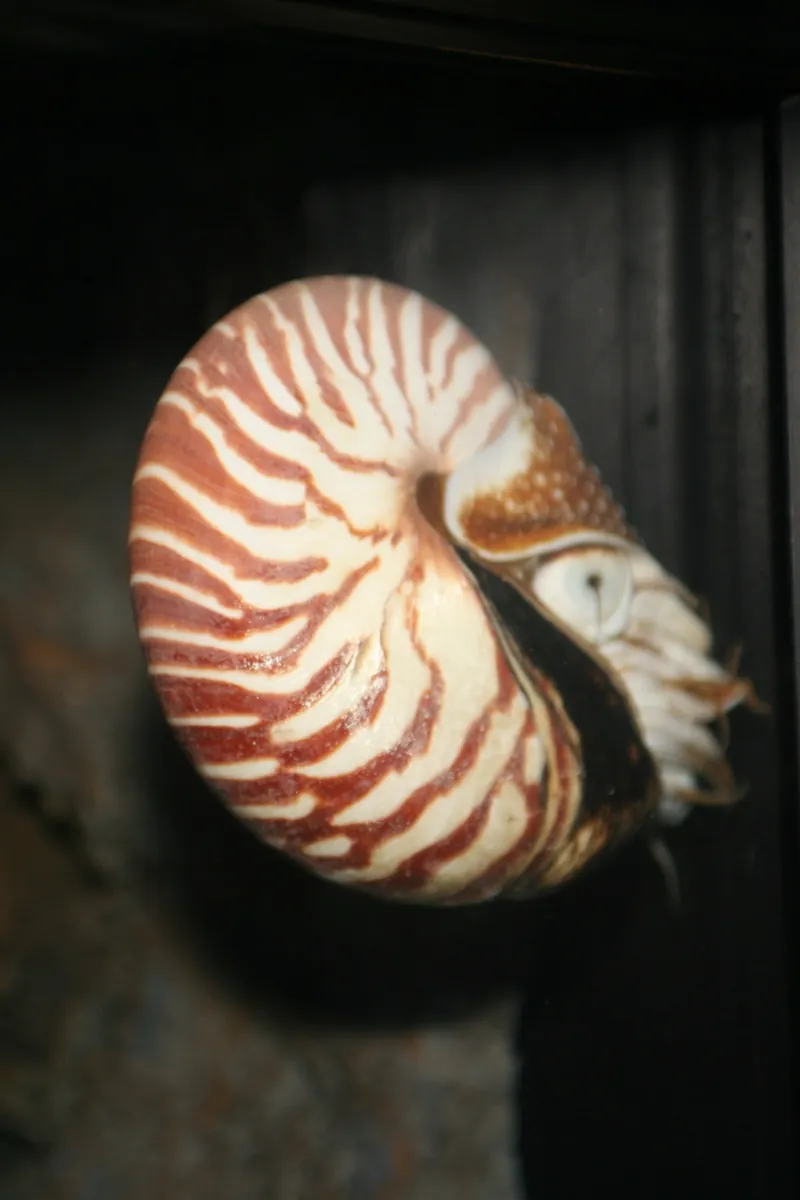
A shell full of rooms
Every ammonite had a shell divided into chambers, which it used to float. NHM
Ammonites hatched with tiny shells and added new chambers as they grew, moving the whole body forward and sealing off the old space with a wall called a septum. NHM
Nobody knows how often a new chamber was built. A monthly rhythm has been suggested, but there is no evidence for it. NHM
The septa strengthened the shell and stopped the water pressure outside from crushing it. BGS
The animal lived only in the last chamber, the body chamber. The earlier chambers held gas or fluid, which it could adjust to rise, sink and move, much like a submarine. BGS
The chambers were linked by a tube. NHM, fossil sites
Sutures: the wiggly lines
Where each septum met the shell wall it left a wiggly line called a suture. The septa had frilled edges. BGS
The crinkly, complex suture is what tells ammonoids apart from nautiloids. Britannica
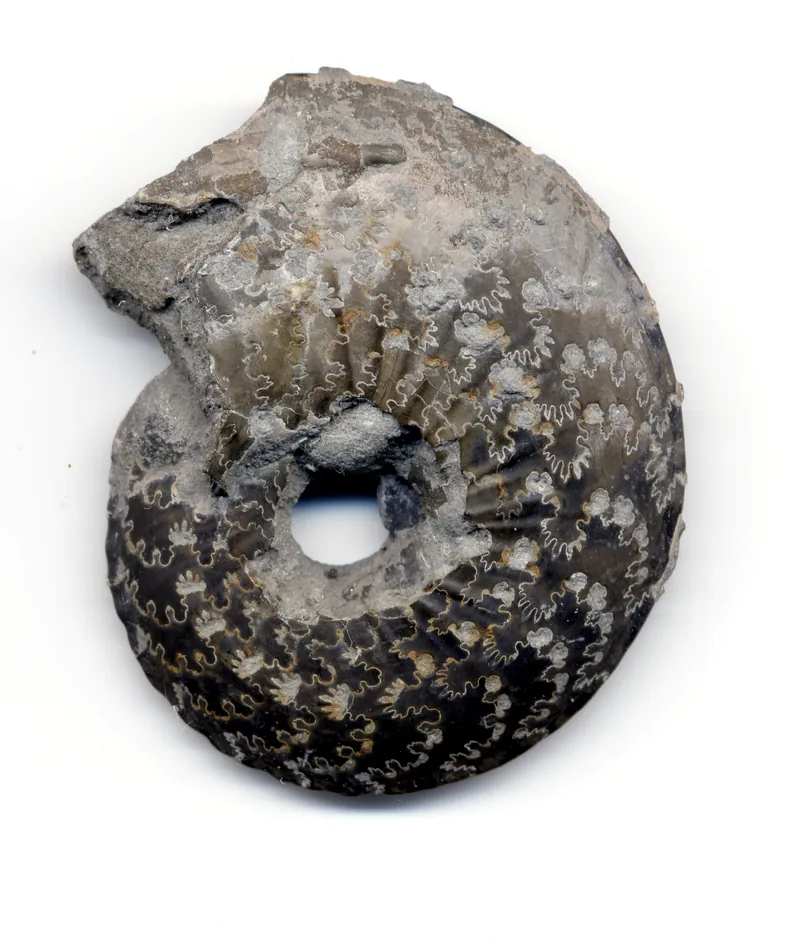
Shell and shape
Each complete turn of the coil is called a whorl. BGS
Apart from the innermost whorl, the shell had three layers of aragonite, a form of calcium carbonate. The thick middle layer was nacre, or mother-of-pearl. BGS
Ribs, spines and knobs on the shell may have made it stronger, and may have helped protect and hide the animal. They also helped with buoyancy and may have been for display. BGS
Most ammonite shells grew into a flat spiral, called a planispiral. NHM
Shells could be loosely or tightly coiled, flat or twisted like a corkscrew, and some started as a tight spiral and then straightened out. NHM
Unlike snails, ammonites coil in one plane, so they are neither left- nor right-handed. NHM, snakestones
Ammonites coiled in unusual ways are called heteromorphs, from Greek words meaning ‘different’ and ‘form’. BGS
Nipponites mirabilis, found in Japan, is exceptionally rare and looks a bit like a knot. NHM
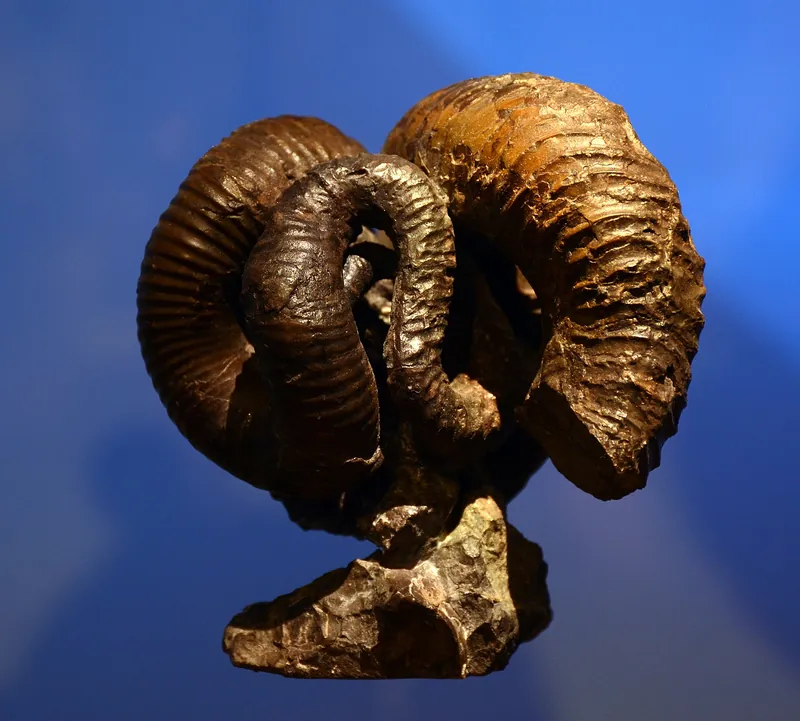
Books traditionally draw ammonites with the body chamber at the top. In life they swam the other way up. BGS
The soft body
No fossil of ammonite arms has been found yet, so much of what we know about the soft body is inferred from living cephalopods. NHM
The museum’s fossil curator thinks ammonites more likely had eight arms than the many tentacles of a nautilus. NHM
A 3D study of a fossil with preserved muscles suggests ammonites swam by jet propulsion, pushing water out through a tube called a hyponome. Imperial College
Paired muscles probably pulled the animal deep into its body chamber for protection. Ammonites had no ink sac to hide behind, unlike squid and octopuses. Imperial College
That fossil, five centimetres across, was found in Jurassic rock in Gloucestershire in 1998. It was the first time an ammonite’s soft parts had been seen in three dimensions. Imperial College
The same study found muscles that nautiluses do not have, so ammonites and the nautilus may be less alike than was thought. Imperial College
Males, females and names
Males and females looked different. Males (microconchs) could have long prongs called lappets near the shell opening; females were macroconchs. NHM
An estimated more than 10,000 ammonite species have been discovered, and possibly more than 20,000. NHM
Counting is tricky because males and females of one species were once often named as two separate species. NHM
Each ammonite has a two-part Latin name, the genus followed by the species, plus the name of the person who first described it and the date. BGS
Many ammonite names end in -ceras, from the Greek keras, meaning horn. BGS
Our view: the most surprising thing is how little we know about the animal itself. Tens of thousands of shells, and still no fossil arms.