Finding ammonites, and following the code
What the Natural History Museum and the local fossil codes advise. Read the code for the beach you visit before you go.
Please note. This page summarises published advice, in our own words, with links to the full codes. It is not a substitute for them, for local signs, or for checking the tides on the day.
Before you go
Always check the tide times before you go. The Code advises collecting on a falling tide. West Dorset Code
In some places the tide rises much faster than you might expect and can cut you off, so always have a way back. NHM, beach guide
Always tell someone where you are going and when you expect to be back. West Dorset Code
The West Dorset Code’s best advice for beginners and school groups is to stick to the beaches. West Dorset Code
On the beach
Cliff falls happen suddenly and without warning, so keep away from the base of cliffs. West Dorset Code
Keep off moving rock falls and mudflows. The seaward edges of mudflows can be hidden under shingle. West Dorset Code
Never dig fossils out of cliffs: it makes them even less stable, and you would need the landowner’s permission. NHM, beach guide
There should be no digging into the cliffs without permission. West Dorset Code
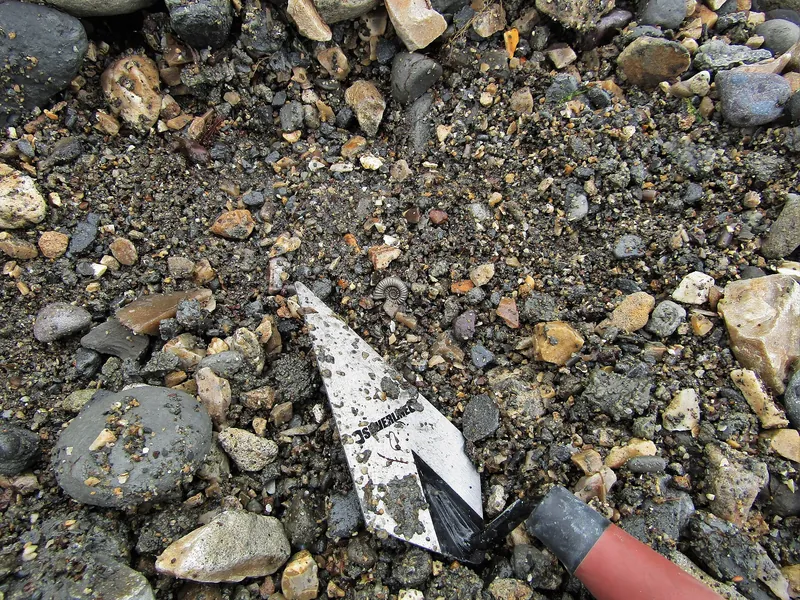
The museum’s guide says the best tools are your eyes: in most places many fossils can be found loose on the beach and simply picked up. NHM, beach guide
If you use a hammer or other tools, wear goggles. West Dorset Code
Its suggested kit is sturdy walking boots with good ankle support, a rucksack for your finds and a first aid kit. NHM, beach guide
Who owns the fossils?
As a general rule, landowners own the fossils on or under their land. The National Trust is the main landowner on the West Dorset coast. West Dorset Code
The West Dorset Code covers National Trust and Charmouth Parish Council land between Lyme Regis and Hive Beach at Burton Bradstock. West Dorset Code
The Natural History Museum’s advice: make sure you have permission for where you go and what you take, and look up the rules for each place. At some sites you may look but not collect. NHM, beach guide
The Undercliffs and Monmouth Beach
In the Undercliffs reserve you may collect loose material found on the beaches and foreshore. Undercliffs Code
But visible water-worn ammonites, especially on Monmouth Beach, must be left, and the ammonite pavement must not be damaged. Undercliffs Code
Power tools must not be used there without consent from Natural England. Undercliffs Code
Recording what you find
Ammonites are among the commonest fossils on the Dorset coast, so ordinary finds don’t need recording, though unusual species or very large shells are worth recording. West Dorset Code
If an exciting fossil is stuck in a cliff, take a photo, note where it is and tell a museum. NHM, beach guide
And leave some fossils for other people to find: you don’t have to collect everything. NHM, beach guide
Read the codes
- West Dorset Fossil Collecting Code of Conduct (PDF), Lyme Regis to Burton Bradstock.
- Undercliffs Fossil Collecting Code (PDF), Axmouth to Lyme Regis, including Monmouth Beach.
- Natural History Museum: How to find fossils on the beach.
Our view: the best ammonites on Monmouth Beach are the ones nobody can take home. Leaving them is what lets the next visitor see them too.
Next: Mary Anning →